
May 25, 2019

The 10 Most Read Posts Since My Blog First Appeared 10 Years Ago

I love to blog. (And I won two awards--one from Medical News and the other from Feedspot). It's a catharsis in a way, defined by Merriam Webster as the purging of emotional tensions, relieving oneself of the feelings that through catharsis, arise to the surface. In the 10 years my blog, The Tales of a Stroke Patient and More, has been alive (as opposed to "live" which in my mind doesn't have the same impact), I have always liked to bring you, my dear readers, thought-provoking and inspirational tales to keep your mind working.

There is a counter when you write for Google's Blogger which shows, among many other things, the 10 most read posts to date. I hope you gain something from them if reading for the first time, or re-read them for reinforcement, published around the world in every continent except Antarctica. (I'm starting to wonder if anybody even lives there!) Here they are in order:

A Place for EVERYTHING Stroke and Other TBIs--strokefocus.net 

(10,095 readers)

This is the story of amazing Daniel Gu and how he founded Strokefocus.net, the completed website coming in June. It's a touching, almost tear-producing process of his recovery. 

Alcohol and Stroke: You May Be Just Asking For It 

(8681 readers)

This post created some brouhaha because people took offense that it was directed at them instead of thanking me for the information. Oh, well. No good deed goes unpunished. 


The Words I've Been Longing To Hear: An Energizing Visit from the Cable Guy 

(8,360 readers)

Don't get any ideas of an intimate nature! We were just having a conversation. That was the first time the cable guy and I spoke without asking me to repeat myself. The post has near-comical elements.


Fatigue and Stroke, aka I'm Hittin' the Wall 

(7,838 readers)

The world is filled with acronyms, and this post follows suit.  It's called PSF, Post Stroke Fatigue, and explains possible reasons for PSF and the foods that combat it. 


How Two Legal Drugs Caused My Hemorrhagic Stroke 


(6,717 readers)
The thinking was I was allergic to Heparin which isn't an allergy at all. As a result, the doctor finally took away every blood thinner. The right thing to do? Not really, I learned much later on. 


Caregivers Are Suffering; Stroke Survivors Are Suffering: Who Has It Worse?


(5,964 readers)
When it comes to caregivers, they are passionate about the position whether they are burned out or lovingly embrace it. But GFYS? That came from one of the burned out ones. 


Can't Do's and Can Do's: A Stroke Survivor's Thoughts


(5,389 readers)
I open up on my limits. Ten for each. If I think about my 10 "can't do" set , I try not to dwell on it. After all, I have 10 "can do" activities that follow.


Thoughtless Person: You Didn't Finish the Book YET? Stroke Survivor: No, Dumbass. Remember? I've Had a Stroke!


(5,339 readers)
Dyslexia and aphasia are only two of the subjects discussed. I read slower now, but I read, and other disorders are included. That title, by the way, happened to me.


Ten Things NOT to Say or Do to a Stroke Patient


(5,274 readers)
Insensitivity is at the heart of this post. After I wrote this post, some other bloggers copied the title. I didn't mind because that's stroke awareness, front and center. 


Sex and the Stroke Survivor: A Case of Futility?


(5,046 readers)
Sex is very important to some people, but after they had a  stroke, not so much anymore. Tips on how to do more are included with illustrations even. Hoo-hah.

May 19, 2019

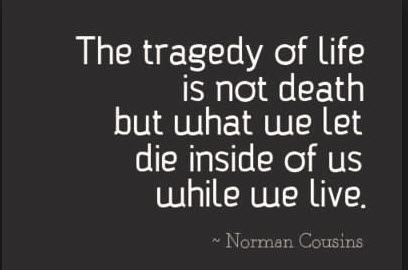
Life and Death, the Great Equalizers

Michael R. Strain, the well-known economist, once said, "That we all start life helpless and completely dependent means we have much more in common than I appreciated a year ago" [when his son was born]. I had the same newly-found thoughts like Strain when my boys were born, and for the one I lost in between, too, as birth being an equalizer. 

The other side of the discussion at hand? We all die. Thus, the title of this post. But of the two--birth and death--death is recognized as the greatest-of-all, the king-of-the-hill equalizer. "You can't take the money with you when you die," my father would always say about wealth amassed during any person's funeral. He died, too, and he followed the everlasting rule. #6, says the angel.


Once in a while, more often now, I think about death. The thoughts are random. I think to myself, in less than 10 years, I'm going to be 80. I feel 50, even now that I had a devastating, close-to-death stroke and wearing the leg brace. Go figure.

People always commented on my youthfulness, that I seemed 10 years younger than my current age.

"45?" they would say. "You look 35!"

"Come on. 55? You look 45," they argued. 

Those contradictions, that I looked younger than I currently was, all evaporated when I turned 65. Nobody says anything remotely like that anymore. Sometimes, I prompt them. They roll their eyes.

The baby boomers, some of them, maybe even most of them, and I believed in perpetual youth up to around 60 years old. Many of them are fixated on not only being alive but looking younger as well. There are under-the eye creams for bags, wrinkle products to get rid of those very fine lines, sometimes only apparent to you, and Jennifer Aniston and the like extolling the merits of items that give you a youthful glow. I tried them all. Hogwash. Growing old is not for sissies, Joyce #2's father would say. It sucks. 


It's better that the alternative--death, I mean--unless you're willing to die, even welcome death, and not discover how stories turn out while you're alive. For example, I don't want to die: 
Before I know if I will ever be a grandmother 
Before I'll finish the 5th book (I'm working on #3 currently) 
Before I improve enough to do a 5-mile walk without stopping

The country artist, Randy Travis, said it best in the song, Three Wooden Crosses:
I guess it's not what you take when you leave this world behind you.
It's what you leave behind you when you go.


https://www.youtube.com/watch?v=cP8lCapcqwM

The final thing I'm going to blurt out in this stream-of- consciousness rant: if you're feeling anxious right about now, if I put thoughts in your head that you wish weren't there, watch  this video to feel better.  


https://youtu.be/PpJoM1Yvm-Y

Um, feel better now?

May 12, 2019

Sometimes, It's All About Your Shitty Genes

First some needed history. According to the esteemed doctors who sometimes don't know crap, I was told by one of them that I had to take Avelox for an ear infection. Avelox, I later found out, could give a person blood clots (the person in this case is me). I went to the Emergency Room for excruciating pain. 

Quoting from my previous blog (How Two Legal Drugs Caused My Hemorrhagic Stroke, and here's the link --https://stroketales.blogspot.com/2014/07/how-two-legal-drugs-caused-my-stroke.html), "The ER doctor admitted me and I was put on Lovenox, a low-molecular form of Heparin, to break up the clots. (Now here's where the story gets interesting). As a result of being on Heparin, I developed Heparin-induced thrombocytopenia (HIT), a serious side effect that may occur when one is being treated with heparin. HIT can lead to low blood platelet counts, which I had." 

HIT can also cause a brain bleed, ergo my hemorrhagic stroke. And that explanation, to my brain with parts that died, never to return, made sense enough.

But there's more to the story. Once I moved to Portland, I found out through a blood test that I had Protein S Deficiency, which causes abnormal clotting.

The National Institutes of Health say, "Protein S Deficiency (PSD) is usually hereditary, but may be acquired from lack of Vitamin K, for example. [My mother cooked everything more than it should have been, including  green vegetables, a primary source of Vitamin K, until they lost some of the vitamins inherently theirs].  The hereditary form of Protein S Deficiency is caused by a mutation in a gene called PROS1.  This condition is inherited in a dominant manner, which means that an individual who inherits only one mutated copy of PROS1 has an increased chance of developing symptoms of this disease."

So whether hereditary or acquired, I had PSD.

"There are tests for Protein S Deficiency, just ask your hematologist for screening," says James of the group dedicated to Protein S Deficiency.  [https://www.proteinsdeficiency.com/"Apart from clotting related issues, I am not aware of any other issues caused by Protein S Deficiency."

I did a random poll among family and friends, knowing what happened to me, about whether they should get tested for abnormal blood clotting with Protein S Deficiency. Here are some of their stupid, meaningless responses:

"Hell, no. Why would I do testing if it's going to happen anyway?"

"If it's meant to be, it's meant to be."

"I hate going to the doctor."

The NIH also say, "The greatest life-theatening risk to patients with protein S deficiency is a pulmonary embolism (PE), a deep vein thrombosis (DVT) that travels through the bloodstream and gets stuck in the lungs. People with hereditary protein S deficiency have about a 2- to 11 times increased risk for developing a DVT or PE in comparison with those without a deficiency."

I had a PE, too, in 2015.

Whether the reason I got the stroke is from HIT, PSD, or both, there are tests to know the risks for both HIT and PSD. Wouldn't you want to know? 


Or are you like the ostrich who buries his head in the sand? (Not true, by the way. It's a metaphor. But it serves the purpose here). Why worry for a week or two if you have HIT and PSD before you get symptoms, if you could know the next day through tests? The tests would involve a blood draw, but man or woman up!